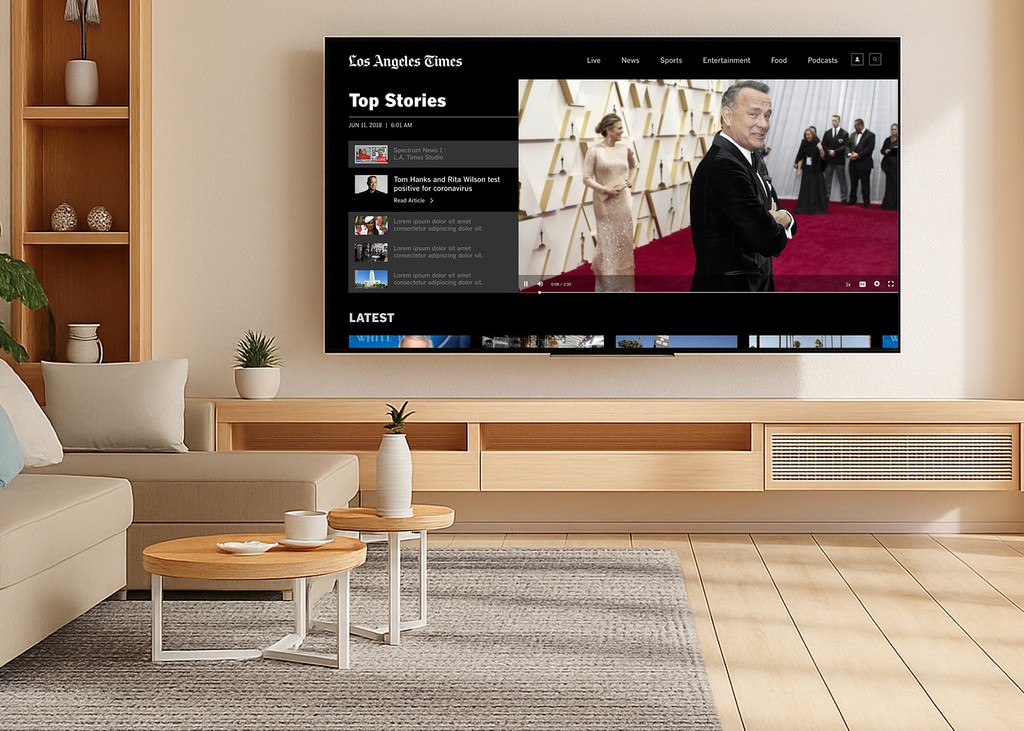
The L.A. Times Video Ecosystem : Scaling Media Independence
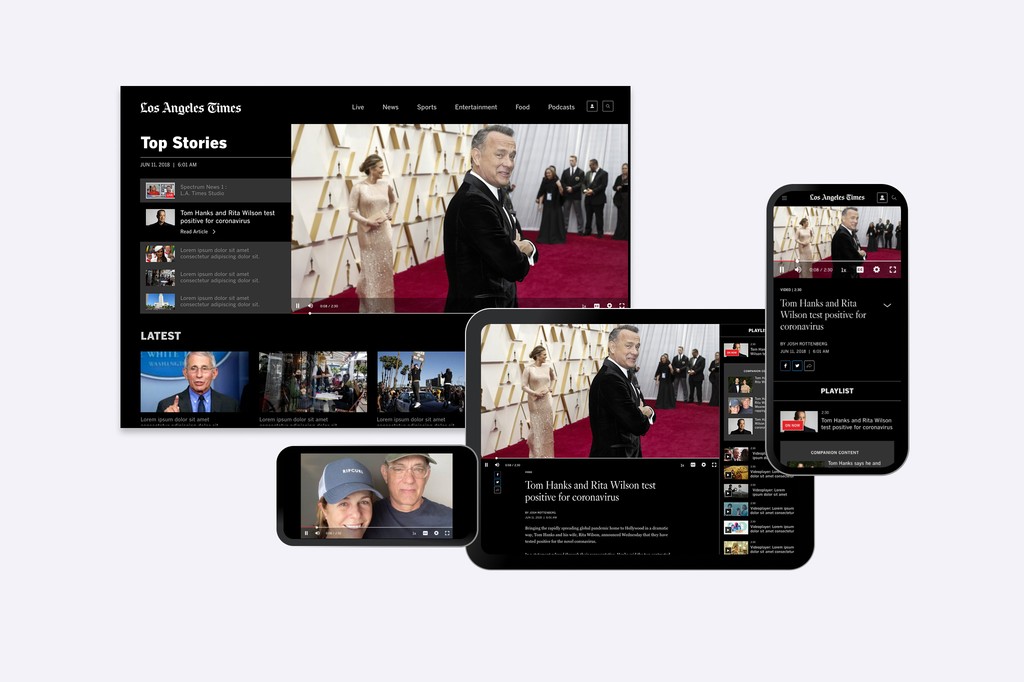
A single, unified design framework scaled across Mobile Web, Native iOS/Android, Living Room (CTV), and institutional B2B environments.
Led the cross-platform product design of a proprietary, native-first streaming media ecosystem that migrated the L.A. Times away from high-cost, restrictive third-party video vendors. By pairing rigorous user and market research with CMS and streaming best practices, we re-architected video from an isolated, lagging widget into an organic storytelling layer embedded directly within published articles with in our IA and DAM. To achieve this at scale, we expanded our federated design system with tokenized video layers and media components built for strict accessibility compliance. Spanning Mobile Web, Native Apps, Connected TV (CTV), and specialized healthcare networks via NantHealth, the custom player architecture introduced ad-supported subscription tiers and player personalization. The result dramatically streamlines internal workflows, reduced user interaction debt, increasing session times and unlocking $1M+ in premium ad inventory for our direct sales and studio teams.
Domain: News Media / Streaming Architecture / AdTech & Subscription Monetization
Platforms: Mobile Web, Native Apps, Connected TV (CTV), B2B Institutional Networks
The Executive Summary
The Challenge: As the L.A. Times exited the pandemic, video engagement was severely bottlenecked by fragmented third-party API vendors and disconnected player experiences. Editorial Production relied on legacy workflows for requests, editing and approvals. For the business, relying on outside hosting meant missing out on high-yield monetization opportunities, SEO traffic suffered from poor editorial integration.
The Systemic Strategy: Designed a native-first, proprietary video player platform from the ground up. Instead of forcing users into an isolated "video hub," we re-imagined streaming media as a dynamic storytelling layer that pairs seamlessly with written journalism to increase page views and session depth.
The Design Discipline Integration: Conducted rigorous creator, market and behavioral research to implement modern streaming heuristics, updated the organization's federated design system to support variable media layouts, and established strict WCAG compliance to support highly restricted medical environments.
The Multimodal Scale: Engineered the player to scale seamlessly across the entire user ecosystem—from personal mobile screens and desktop layouts to Connected TV (CTV) living room experiences, and onto specialized healthcare displays via a strategic collaboration with NantHealth.
The Proof: Achieved 100% platform independence, eliminating vendor API overhead, driving a 400% increase in video plays, and unlocking $1M+ in net-new revenue through custom CTV ad units and ad-supported subscription tiers.
Market Discovery & User Behavior Research
Grounding Platform Architecture in User Behavior
Market Research & Streaming Best Practices: Analyzed global streaming benchmarks and modern media player heuristics to establish baseline requirements for both internal and external users. We identified that the primary driver for abandonment in news media streaming wasn't content quality, but interaction debt—specifically page-load lag, rigid aspect ratio shifts, and disruptive ad cue-points.
Quantitative User Research: Audited internal analytics to uncover a massive engagement numbers, 200-300% higher than a static article. Non-English Native Language speakers accounted for 80% of video traffic. And was the primary point of entry onto our platforms.
The Structural Hypothesis: If we integrate video natively within the vertical reading flow, utilize asynchronous loading, and employ smart inline picture-in-picture behavior when a user scrolls past a player, we can maximize video plays while preserving reading velocity.
The Challenge — The Cost of Vendor Dependency
Moving From "Hosting" Video to "Owning" the Media Ecosystem
The Legacy Friction: Newsroom workflows required writers/editors to request video content within the CMS, then track production in spreadsheets or in Slack. Then adding youtube links inline. Going outside the DAM platform for untagged content assets.
The User Perceptions: Third-party video infrastructure created an fragmented user experience. The players felt disconnected from the premium typography and layout of the L.A. Times brand, YouTube Ad maps caused high bounce rates and interaction friction.
The Revenue Bottleneck: Legacy API vendors limited our control over ad placement and monetization variables. To satisfy studios and premium advertisers, the editorial and design teams needed a layout that could seamlessly highlight content relevance and support modern e-commerce flows without degrading page-load velocity
The Systemic Shift — Video as an Editorial Layer
Building the Interconnected Storytelling Layer
The Strategy: The data architecture and new user flow broke down the wall between video and print journalism.
We stopped treating video as a destination and started treating it as a layer of the story. We stopped forcing users to make a choice between reading an article or watching a Live/OTT/VOD. I set the vision for an interconnected ecosystem where video was the entry point as a dynamic, contextual layer of the written word.
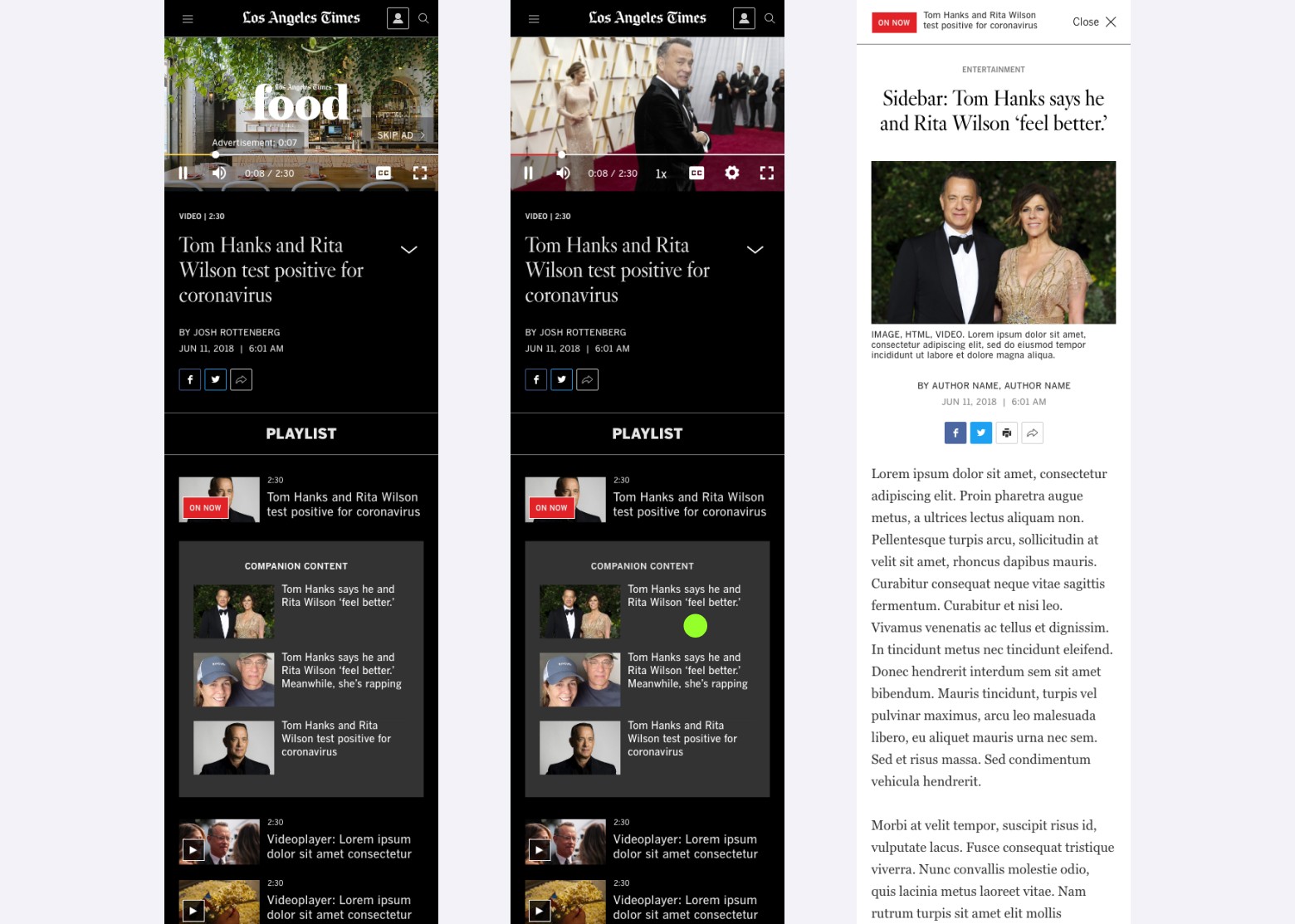
Automatically, packaging content starting at Video content, the UX/UI Designer explored new features for users to engage with articles while videos played. This minimized user interaction loops, deepened session duration, and immediately created premium, highly targeted ad inventory for our direct sales teams.
Multimodal Scale — From Mobile Web to the Living Room
Evolving the Design System & Universal Compliance]
Evolving the Federated Design System: To ensure consistent execution across engineering channels, we extended the L.A. Times’ existing 1,800+ component federated design system. We engineered a new sub-library of tokenized media elements, including:
Dynamic, variable aspect-ratio video containers.
Context-aware play states and gesture-driven scrubbing UI.
Semantic dark-mode variables optimized specifically for low-light, lean-back viewing environments.
Standardized advertising container wrappers built to smoothly accommodate programmatic CTV and pre-roll content without breaking the host layout.
Accessibility & Compliance (WCAG & B2B Environments): * Consumer Products: Enforced strict WCAG AA/AAA compliance on web and mobile app interfaces, designing high-contrast closed caption controls, screen-reader optimized video metadata structures, and keyboard-accessible player controls.
Institutional / Healthcare Networks: Collaborating with NantHealth required deploying this streaming engine into hospital patient engagement networks. This environment introduced strict regulatory and hardware constraints. The UI was intentionally lightened and optimized for low-bandwidth hospital networks, meeting stringent 508-compliance standards.
Designing Across Diverse Environmental Contexts
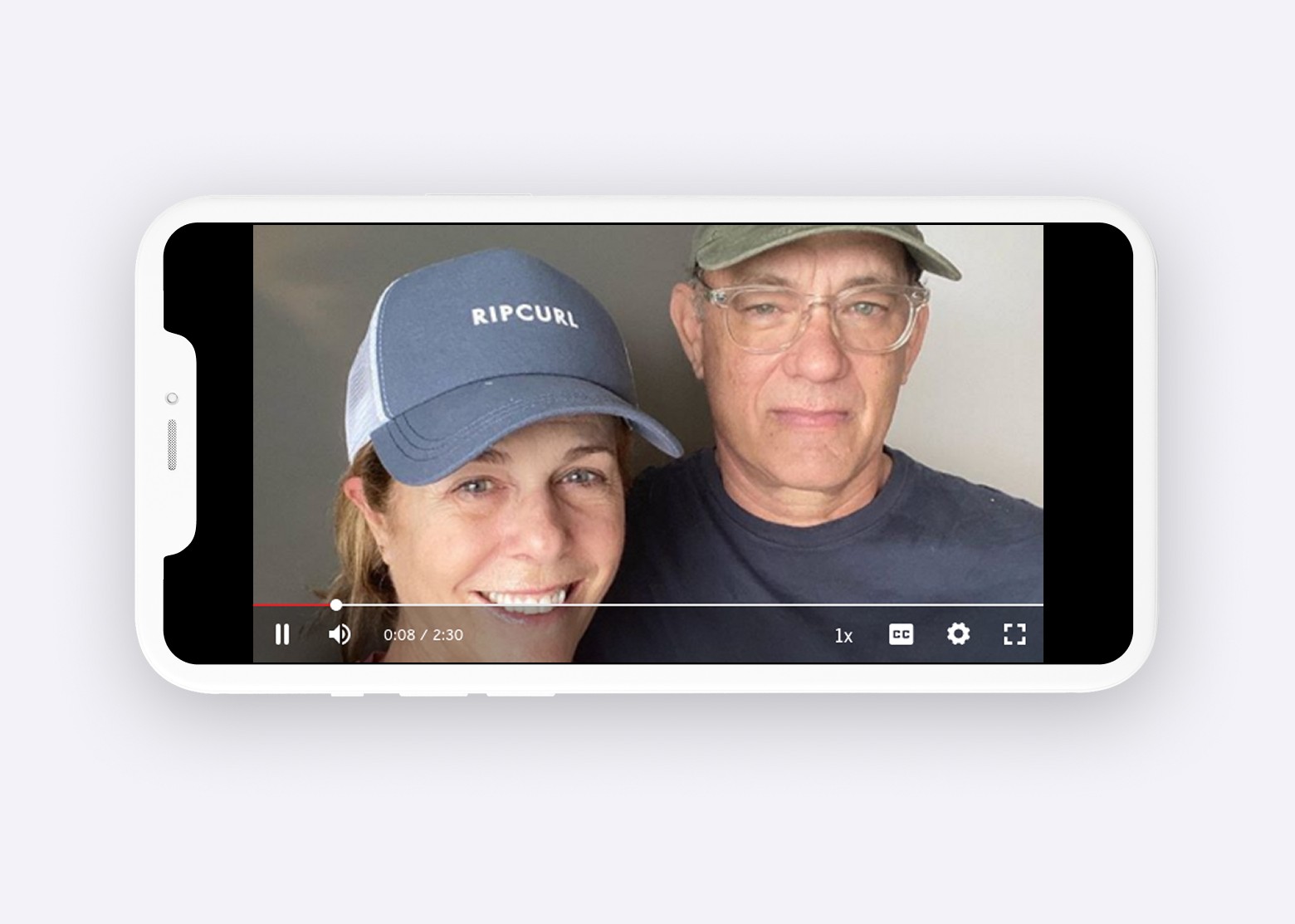
Mobile Web & Native Apps (.com, iOS, Android): * Focused on low latency, gesture-driven player interaction, and personalization variants. The UI was optimized to keep users engaged within the layout while scrolling, utilizing picture-in-picture mechanics to prevent drop-offs.
The Living Room Experience (CTV): * Re-architected the interface for lean-back consumption and 10-foot UI standards. This layout focused heavily on content discovery and supported high-yield CTV advertising units that matched studio and brand demands.
Patient Engagement Networks (B2B Health Tech): * Collaborated with NantHealth to expand the L.A. Times media footprint into healthcare environments. This required a lean, highly specialized user interface optimized for clarity and high-relevancy branded content tailored specifically for patient environments.
Results & Reflections
Quantifiable Platform Independence
The Capital ROI: By taking complete architectural ownership of our streaming media, we transitioned the L.A. Times from a passive content publisher into a self-sustaining media platform. The 400% surge in video plays directly validates that reducing layout friction unlocks user engagement. More importantly, establishing a proprietary ad-supported subscription tier and custom CTV ad stack proved that enterprise design operations can directly generate $1M+ in net-new revenue while completely neutralizing technical vendor waste.
Domain: News Media / Streaming Architecture / AdTech & Subscription Monetization
Platforms: Mobile Web, Native Apps, Connected TV (CTV), B2B Institutional Networks
The Executive Summary
The Challenge: As the L.A. Times exited the pandemic, video engagement was severely bottlenecked by fragmented third-party API vendors and disconnected player experiences. Editorial Production relied on legacy workflows for requests, editing and approvals. For the business, relying on outside hosting meant missing out on high-yield monetization opportunities, SEO traffic suffered from poor editorial integration.
The Systemic Strategy: Designed a native-first, proprietary video player platform from the ground up. Instead of forcing users into an isolated "video hub," we re-imagined streaming media as a dynamic storytelling layer that pairs seamlessly with written journalism to increase page views and session depth.
The Design Discipline Integration: Conducted rigorous creator, market and behavioral research to implement modern streaming heuristics, updated the organization's federated design system to support variable media layouts, and established strict WCAG compliance to support highly restricted medical environments.
The Multimodal Scale: Engineered the player to scale seamlessly across the entire user ecosystem—from personal mobile screens and desktop layouts to Connected TV (CTV) living room experiences, and onto specialized healthcare displays via a strategic collaboration with NantHealth.
The Proof: Achieved 100% platform independence, eliminating vendor API overhead, driving a 400% increase in video plays, and unlocking $1M+ in net-new revenue through custom CTV ad units and ad-supported subscription tiers.
Market Discovery & User Behavior Research
Grounding Platform Architecture in User Behavior
Market Research & Streaming Best Practices: Analyzed global streaming benchmarks and modern media player heuristics to establish baseline requirements for both internal and external users. We identified that the primary driver for abandonment in news media streaming wasn't content quality, but interaction debt—specifically page-load lag, rigid aspect ratio shifts, and disruptive ad cue-points.
Quantitative User Research: Audited internal analytics to uncover a massive engagement numbers, 200-300% higher than a static article. Non-English Native Language speakers accounted for 80% of video traffic. And was the primary point of entry onto our platforms.
The Structural Hypothesis: If we integrate video natively within the vertical reading flow, utilize asynchronous loading, and employ smart inline picture-in-picture behavior when a user scrolls past a player, we can maximize video plays while preserving reading velocity.
The Challenge — The Cost of Vendor Dependency
Moving From "Hosting" Video to "Owning" the Media Ecosystem
The Legacy Friction: Newsroom workflows required writers/editors to request video content within the CMS, then track production in spreadsheets or in Slack. Then adding youtube links inline. Going outside the DAM platform for untagged content assets.
The User Perceptions: Third-party video infrastructure created an fragmented user experience. The players felt disconnected from the premium typography and layout of the L.A. Times brand, YouTube Ad maps caused high bounce rates and interaction friction.
The Revenue Bottleneck: Legacy API vendors limited our control over ad placement and monetization variables. To satisfy studios and premium advertisers, the editorial and design teams needed a layout that could seamlessly highlight content relevance and support modern e-commerce flows without degrading page-load velocity
The Systemic Shift — Video as an Editorial Layer
Building the Interconnected Storytelling Layer
The Strategy: The data architecture and new user flow broke down the wall between video and print journalism.
We stopped treating video as a destination and started treating it as a layer of the story. We stopped forcing users to make a choice between reading an article or watching a Live/OTT/VOD. I set the vision for an interconnected ecosystem where video was the entry point as a dynamic, contextual layer of the written word.
Automatically, packaging content starting at Video content, the UX/UI Designer explored new features for users to engage with articles while videos played. This minimized user interaction loops, deepened session duration, and immediately created premium, highly targeted ad inventory for our direct sales teams.
Multimodal Scale — From Mobile Web to the Living Room
Evolving the Design System & Universal Compliance]
Evolving the Federated Design System: To ensure consistent execution across engineering channels, we extended the L.A. Times’ existing 1,800+ component federated design system. We engineered a new sub-library of tokenized media elements, including:
Dynamic, variable aspect-ratio video containers.
Context-aware play states and gesture-driven scrubbing UI.
Semantic dark-mode variables optimized specifically for low-light, lean-back viewing environments.
Standardized advertising container wrappers built to smoothly accommodate programmatic CTV and pre-roll content without breaking the host layout.
Accessibility & Compliance (WCAG & B2B Environments): * Consumer Products: Enforced strict WCAG AA/AAA compliance on web and mobile app interfaces, designing high-contrast closed caption controls, screen-reader optimized video metadata structures, and keyboard-accessible player controls.
Institutional / Healthcare Networks: Collaborating with NantHealth required deploying this streaming engine into hospital patient engagement networks. This environment introduced strict regulatory and hardware constraints. The UI was intentionally lightened and optimized for low-bandwidth hospital networks, meeting stringent 508-compliance standards.
Designing Across Diverse Environmental Contexts
Mobile Web & Native Apps (.com, iOS, Android): * Focused on low latency, gesture-driven player interaction, and personalization variants. The UI was optimized to keep users engaged within the layout while scrolling, utilizing picture-in-picture mechanics to prevent drop-offs.
The Living Room Experience (CTV): * Re-architected the interface for lean-back consumption and 10-foot UI standards. This layout focused heavily on content discovery and supported high-yield CTV advertising units that matched studio and brand demands.
Patient Engagement Networks (B2B Health Tech): * Collaborated with NantHealth to expand the L.A. Times media footprint into healthcare environments. This required a lean, highly specialized user interface optimized for clarity and high-relevancy branded content tailored specifically for patient environments.
Results & Reflections
Quantifiable Platform Independence
The Capital ROI: By taking complete architectural ownership of our streaming media, we transitioned the L.A. Times from a passive content publisher into a self-sustaining media platform. The 400% surge in video plays directly validates that reducing layout friction unlocks user engagement. More importantly, establishing a proprietary ad-supported subscription tier and custom CTV ad stack proved that enterprise design operations can directly generate $1M+ in net-new revenue while completely neutralizing technical vendor waste.

“There is no reason that function should not be beautiful. In fact, beauty usually makes it more effective.” - Spock
2026© wren bach design studio & portfolio
available for projects / for hire
“There is no reason that function should not be beautiful. In fact, beauty usually makes it more effective.” - Spock
2026© wren bach design studio & portfolio
available for projects / for hire