Disneyland & the power user: re-architecting the disneyland magic key app experience
Passion Project: A Legacy Loyalty App for High-Velocity Product Testing and Contextual Commerce
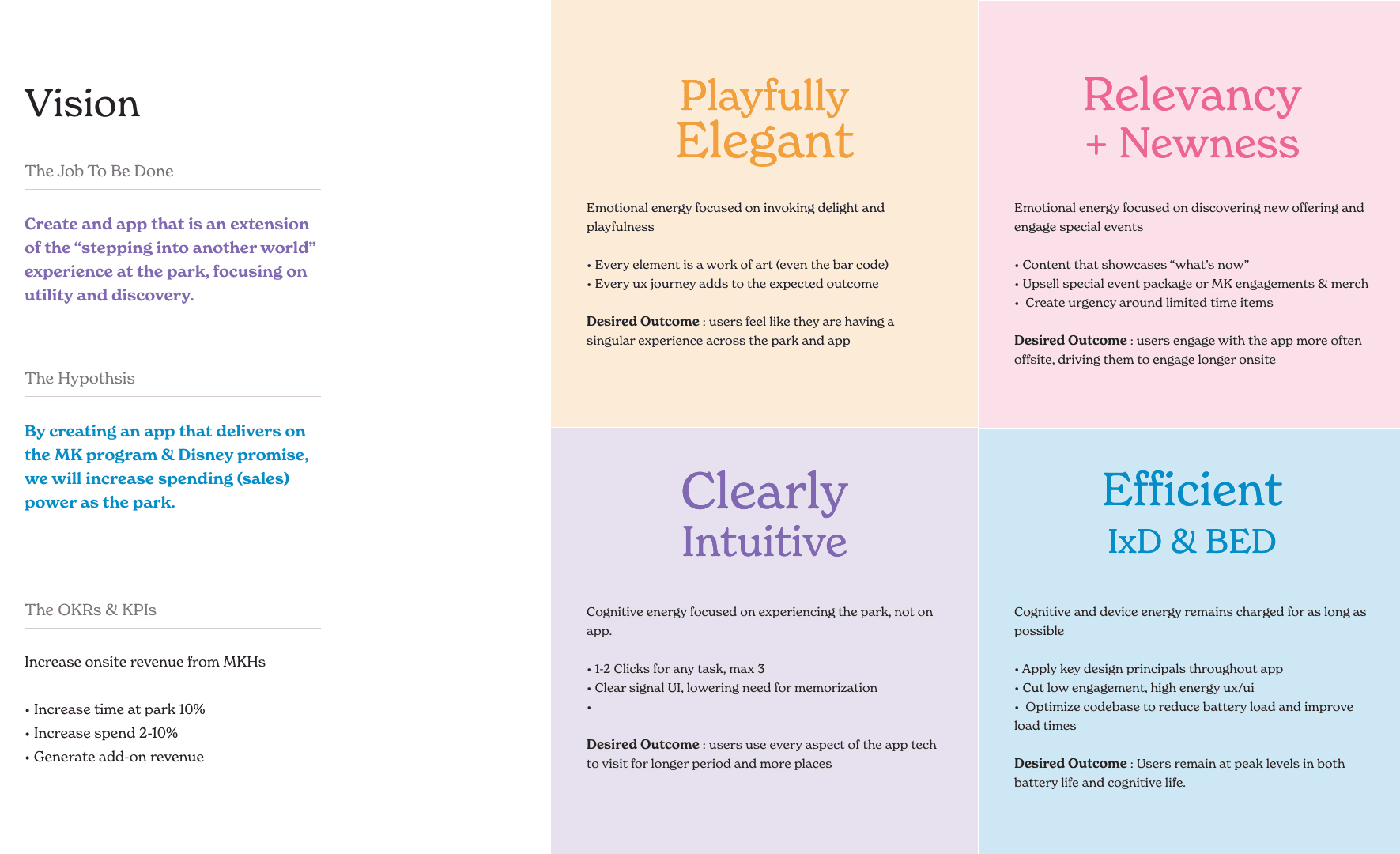
This project showcases my approach as a physical/digital space problem identifier and solver. When traditional research pipelines are inaccessible, I leverage in-the-field research, alternative data streams and swift prototyping methods to discover and articulate business opportunities. By bridging high-level corporate objectives—like multi-variant solutions and AOV expansion—with robust, native development rules, I deliver actionable roadmaps that engineering teams can immediately build and deploy.
This is a personal passion project born from my experiences as an annual pass holder and ux professional. Disney© and it's divisions are not associated with this project. All data used in research has been collected personally or is on the public domain. You can read news about Disneyland app including latest updates and efforts to reduce the amount of time on the app.
Domain: Entertainment Ecosystems / Mobile Commerce / Behavioral Design
The Quick Look:
with $1Billion in annual revenue, Disneyland’s 300k–400k Magic Key holders are the park's most loyal, tech-savvy guests, yet current mobile experience treats them exactly like first-time tourists. Encountering high-click app interfaces in a crowded theme park causes immediate "cognitive explosion," forcing users to abandon digital features. In an intensive 6-week sprint, I designed a standalone, context-aware application strategy that transforms this loyalty cohort into a Live Testing Lab—reducing engineering risk for the tech group while maximizing in-park conversion.
Role: Hands-On Design Leader & Experience Strategist (Combined Leadership & Principal)
Methodology: Fast-track Product Validation Sprint (Concept to Architectural Blueprint)
Scope: UX Research, Journey Mapping, Apple Wallet TAP ID Integration, Contextual Commerce Architecture
🚀 Futurestate Strategic Impact Highlights
Risk-Free Innovation Sandbox: Isolated a highly literate user segment to allow the Technology group to safely A/B/C test emerging tech and interaction models before scaling to millions of general guests.
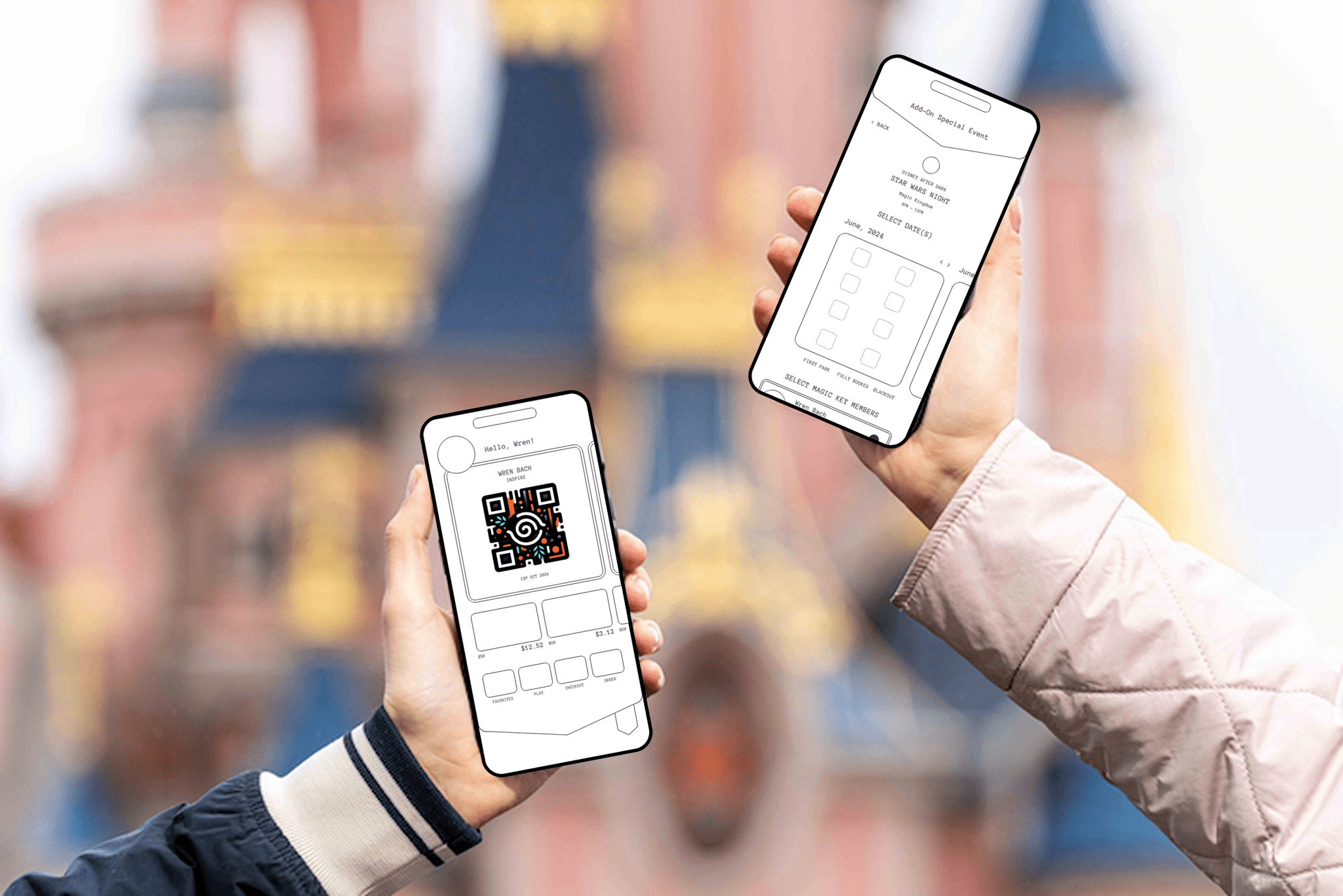
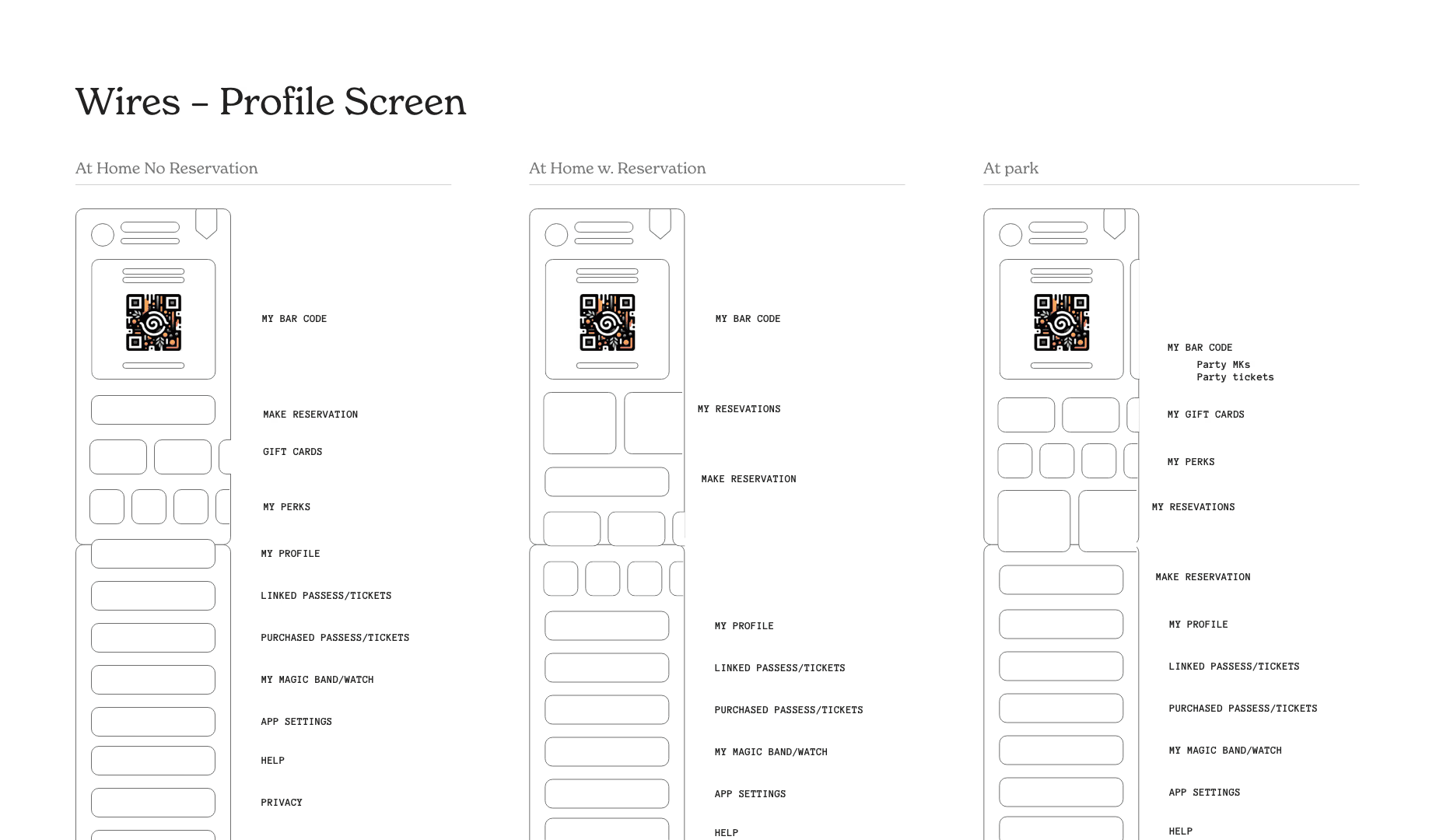
The "No-App" Mobile UX: Re-engineered the core interface into an all-in-one glanceable view, utilizing iOS Wallet and smartwatch APIs to enable frictionless TAP ID functionality across the park.
Operational Alignment: Formulated the first dedicated digital-to-physical feedback loops to solve critical workflow frustrations expressed by frontline Cast Members.
🔍 The Friction: Drowning in "Cognitive Explosion" like a churro with all the toppings
The User Bottleneck: Theme parks are sensory battlegrounds. Forcing a frequent MKH who is navigating traffic, parking, security, and families to hunt through nested digital menus causes rapid mental fatigue and feature abandonment.
The Business Bottleneck: Standard multi-segment apps fail to differentiate high-intent loyalty segments from out-of-town guests. This lack of customization masks purchasing loops and chokes off spontaneous Average Order Value (AOV) growth.
🧠 The 2-Week Sprint Methodology
Field & Survey Data: Synthesized a 12-point online user survey and conducted in-the-field interviews with 30 active Magic Key holders and frontline Cast Members.
Corporate Data Mining: Analyzed public shareholder reports, financial summaries, and legal court disclosures to establish rock-solid business parameters and valid baseline OKRs.
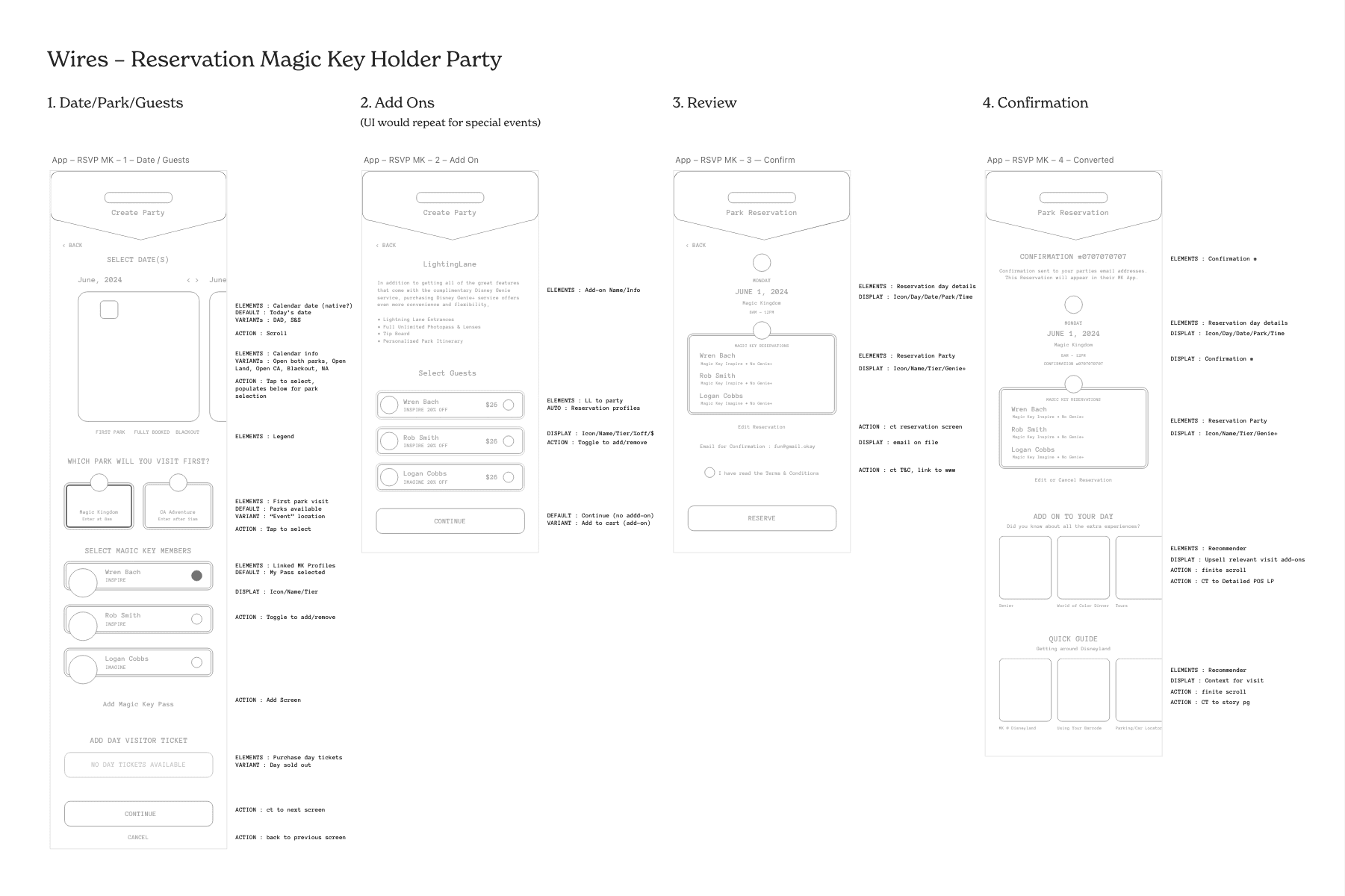
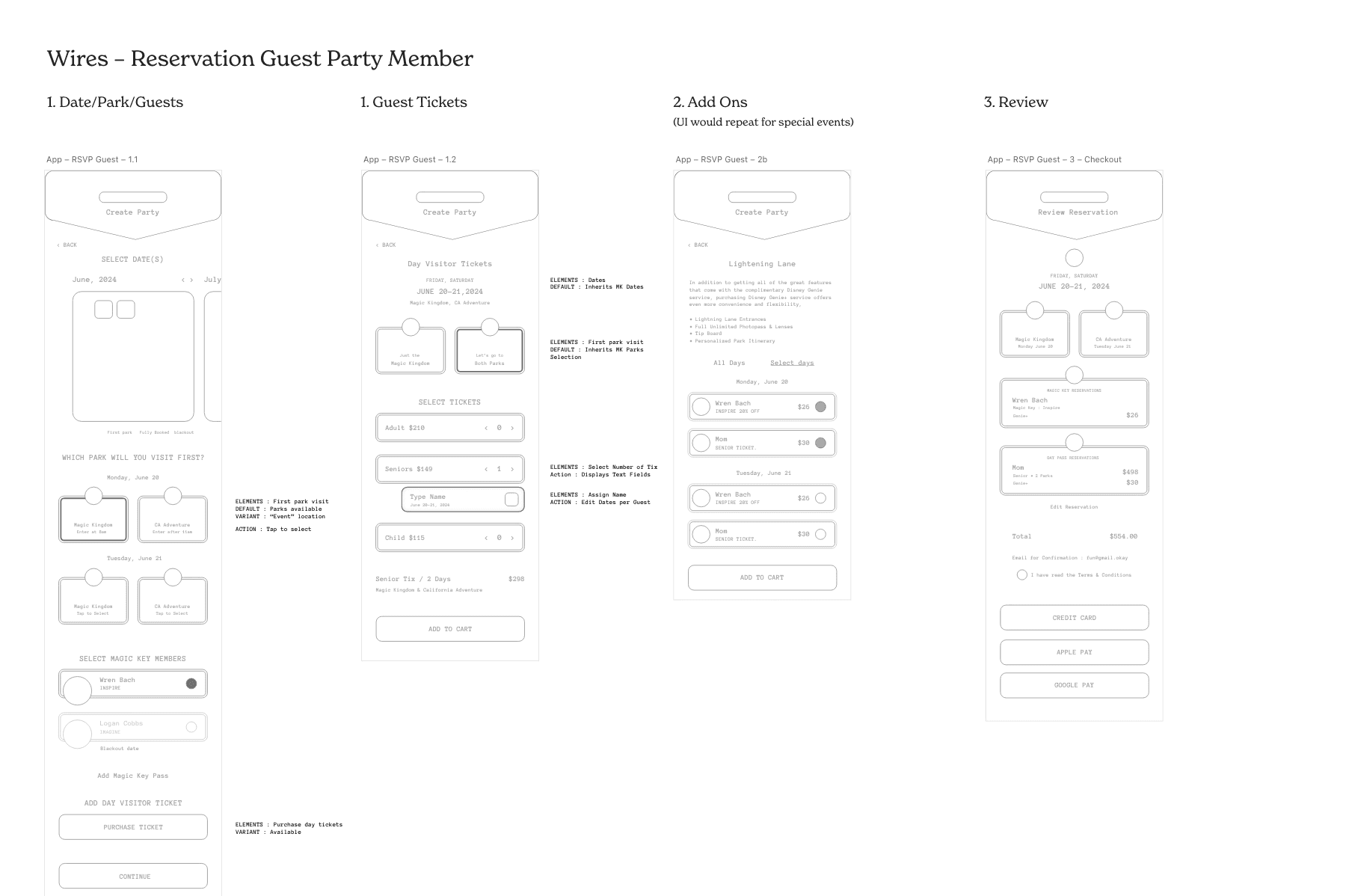
Production-Ready Translation: Audited 5 critical micro-flows across 2 platforms, translating analog concepts into architectural wireframes optimized for rapid developer transition.
💡 The Strategy: Shifting Layouts by User State
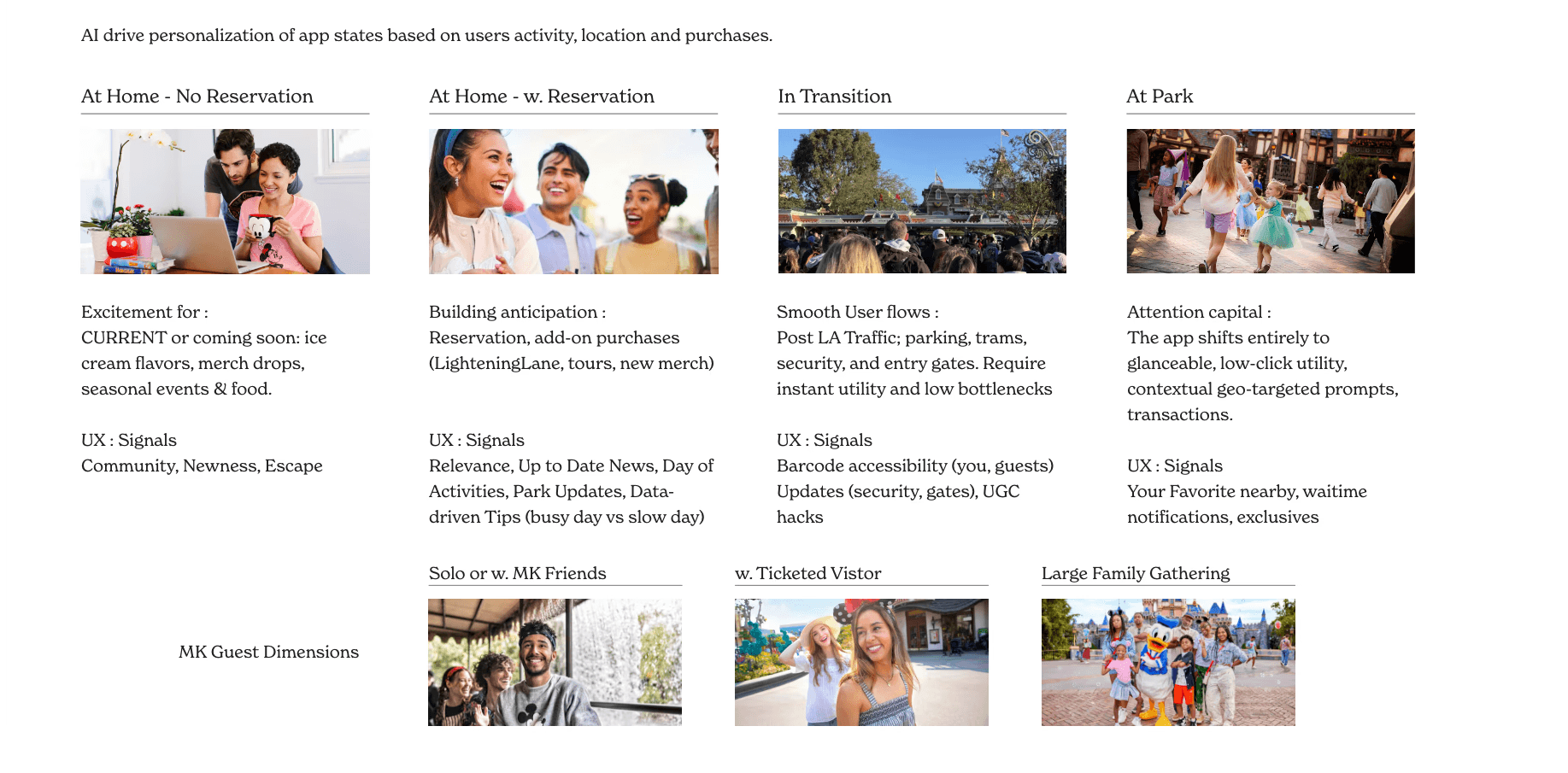
[ AT HOME ] → Focus: Anticipation → Action: Captures Upfront Reservations, Dining & Add-On Revenue
[ FRONT GATE ] → Focus: Rapid Entry → Action: Auto-Elevates High-Contrast Barcodes
[ IN-PARK ] → Focus: Zero-Click UI → Action: Quick in-app Feature access supported by Geo-Fenced Triggers Unlock Spontaneous notifications based on user data and preferences
––––––––––
Preparation (At Home): Capitalizes on undivided attention to capture upfront programmatic revenue (dining reservations, LightningLane upgrades, merchandise pre-sales).
The Threshold (The Front Gate): Maximizes operational velocity. The UI instantly shifts to high-contrast, glanceable ticketing barcodes and parking passes to eliminate gate bottlenecks.
The Present State (In-Park): Powers Spontaneous Contextual Commerce. The app drops manual menu hunting entirely. Using geo-fenced triggers, it surfaces hyper-localized point-of-sale opportunities (e.g., an automated mobile-order discount appearing only when a guest is within 50 feet of a low-wait-time dining location).
🛠️ Core Product Levers & Entrepreneurial Opportunities
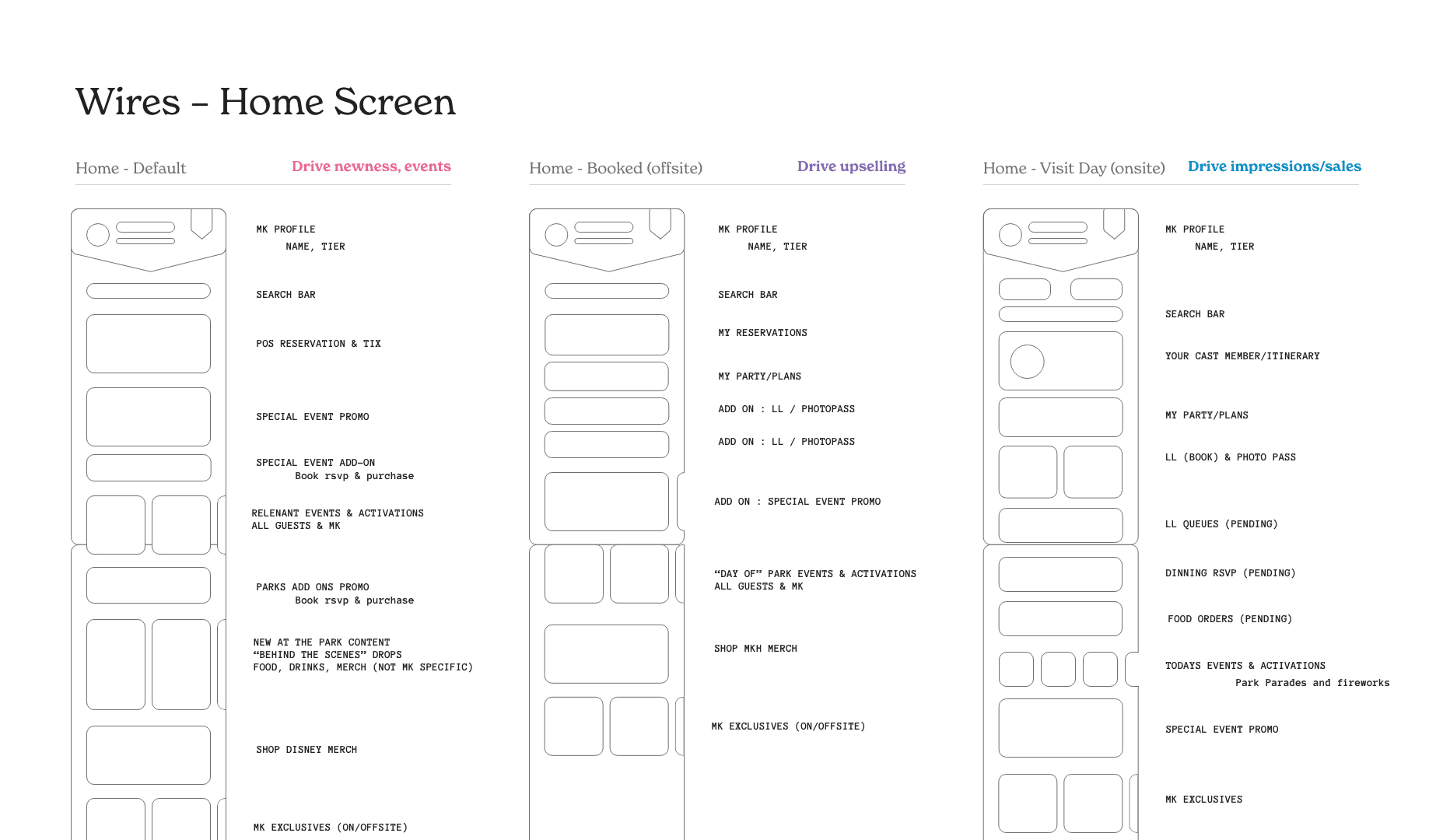
High-Use Feature access: Home and Profile screen will un-nest QR code access, ordering, day-of content, focused behavior to users most desired needs, RELEVANCE and ACCESSIBILITY (like current airline ux)
Reservation Click Reduction: Strips away nested menus to create an instantaneous "Create a Party" micro-flow, respecting the user's attention capital while keeping them inside the digital monetization loop.
Relevancy: Surface what is happening the day of : add-on events, meals, exclusives, shows, archive content
Future levers
Frictionless TAP ID: Integrates personalized metadata directly into the native Apple Wallet, allowing seamless smartwatch and smartphone TAP engagement at turnstiles, dining registers, and LightningLane kiosks.
Contextual Wearable Sync: Syncs with wearable technology to trigger real-time, context-aware haptic signals for proximity alerts, saved favorites, and live attraction updates.
Agentic AI Scaling: Positions the app for shifting economic climates by introducing agentic, geo-based recommendations to drive net-new upsell channels (like automated, self-guided audio tours, AR education).
🍎 Today's Learnings and what I would do different.
AI Research Footnotes: I rerun my business and market analysis and cut the time 4 days to 45min. Although AI did a fairly good job of it's online research, there were human-first gaps it the data sets. Since I have trained my models to provide source footnotes, I could easily double check the results along with my own search analysis.
Interview Questions: My initial questionnaire focused on visits and spend, however I found that users were more interested pre-visit relevancy and in-park friction points that if solved, would drive purchases. (They also missed being able to come to the park after work for dinner, when the park experiences an early evening lull.) My next survey will incorporate more questions about how they use the app in park and how many times a day they use it.
Gen-AI Prototyping: My first pass at this is by hand. I know I can move much quicker and build a working prototype with the latest Design tools. Stay tuned as I experiment!
Domain: Entertainment Ecosystems / Mobile Commerce / Behavioral Design
The Quick Look:
with $1Billion in annual revenue, Disneyland’s 300k–400k Magic Key holders are the park's most loyal, tech-savvy guests, yet current mobile experience treats them exactly like first-time tourists. Encountering high-click app interfaces in a crowded theme park causes immediate "cognitive explosion," forcing users to abandon digital features. In an intensive 6-week sprint, I designed a standalone, context-aware application strategy that transforms this loyalty cohort into a Live Testing Lab—reducing engineering risk for the tech group while maximizing in-park conversion.
Role: Hands-On Design Leader & Experience Strategist (Combined Leadership & Principal)
Methodology: Fast-track Product Validation Sprint (Concept to Architectural Blueprint)
Scope: UX Research, Journey Mapping, Apple Wallet TAP ID Integration, Contextual Commerce Architecture
🚀 Futurestate Strategic Impact Highlights
Risk-Free Innovation Sandbox: Isolated a highly literate user segment to allow the Technology group to safely A/B/C test emerging tech and interaction models before scaling to millions of general guests.
The "No-App" Mobile UX: Re-engineered the core interface into an all-in-one glanceable view, utilizing iOS Wallet and smartwatch APIs to enable frictionless TAP ID functionality across the park.
Operational Alignment: Formulated the first dedicated digital-to-physical feedback loops to solve critical workflow frustrations expressed by frontline Cast Members.
🔍 The Friction: Drowning in "Cognitive Explosion" like a churro with all the toppings
The User Bottleneck: Theme parks are sensory battlegrounds. Forcing a frequent MKH who is navigating traffic, parking, security, and families to hunt through nested digital menus causes rapid mental fatigue and feature abandonment.
The Business Bottleneck: Standard multi-segment apps fail to differentiate high-intent loyalty segments from out-of-town guests. This lack of customization masks purchasing loops and chokes off spontaneous Average Order Value (AOV) growth.
🧠 The 2-Week Sprint Methodology
Field & Survey Data: Synthesized a 12-point online user survey and conducted in-the-field interviews with 30 active Magic Key holders and frontline Cast Members.
Corporate Data Mining: Analyzed public shareholder reports, financial summaries, and legal court disclosures to establish rock-solid business parameters and valid baseline OKRs.
Production-Ready Translation: Audited 5 critical micro-flows across 2 platforms, translating analog concepts into architectural wireframes optimized for rapid developer transition.
💡 The Strategy: Shifting Layouts by User State
[ AT HOME ] → Focus: Anticipation → Action: Captures Upfront Reservations, Dining & Add-On Revenue
[ FRONT GATE ] → Focus: Rapid Entry → Action: Auto-Elevates High-Contrast Barcodes
[ IN-PARK ] → Focus: Zero-Click UI → Action: Quick in-app Feature access supported by Geo-Fenced Triggers Unlock Spontaneous notifications based on user data and preferences
––––––––––
Preparation (At Home): Capitalizes on undivided attention to capture upfront programmatic revenue (dining reservations, LightningLane upgrades, merchandise pre-sales).
The Threshold (The Front Gate): Maximizes operational velocity. The UI instantly shifts to high-contrast, glanceable ticketing barcodes and parking passes to eliminate gate bottlenecks.
The Present State (In-Park): Powers Spontaneous Contextual Commerce. The app drops manual menu hunting entirely. Using geo-fenced triggers, it surfaces hyper-localized point-of-sale opportunities (e.g., an automated mobile-order discount appearing only when a guest is within 50 feet of a low-wait-time dining location).
🛠️ Core Product Levers & Entrepreneurial Opportunities
High-Use Feature access: Home and Profile screen will un-nest QR code access, ordering, day-of content, focused behavior to users most desired needs, RELEVANCE and ACCESSIBILITY (like current airline ux)
Reservation Click Reduction: Strips away nested menus to create an instantaneous "Create a Party" micro-flow, respecting the user's attention capital while keeping them inside the digital monetization loop.
Relevancy: Surface what is happening the day of : add-on events, meals, exclusives, shows, archive content
Future levers
Frictionless TAP ID: Integrates personalized metadata directly into the native Apple Wallet, allowing seamless smartwatch and smartphone TAP engagement at turnstiles, dining registers, and LightningLane kiosks.
Contextual Wearable Sync: Syncs with wearable technology to trigger real-time, context-aware haptic signals for proximity alerts, saved favorites, and live attraction updates.
Agentic AI Scaling: Positions the app for shifting economic climates by introducing agentic, geo-based recommendations to drive net-new upsell channels (like automated, self-guided audio tours, AR education).
🍎 Today's Learnings and what I would do different.
AI Research Footnotes: I rerun my business and market analysis and cut the time 4 days to 45min. Although AI did a fairly good job of it's online research, there were human-first gaps it the data sets. Since I have trained my models to provide source footnotes, I could easily double check the results along with my own search analysis.
Interview Questions: My initial questionnaire focused on visits and spend, however I found that users were more interested pre-visit relevancy and in-park friction points that if solved, would drive purchases. (They also missed being able to come to the park after work for dinner, when the park experiences an early evening lull.) My next survey will incorporate more questions about how they use the app in park and how many times a day they use it.
Gen-AI Prototyping: My first pass at this is by hand. I know I can move much quicker and build a working prototype with the latest Design tools. Stay tuned as I experiment!
“There is no reason that function should not be beautiful. In fact, beauty usually makes it more effective.” - Spock
2026© wren bach design studio & portfolio
available for projects / for hire
“There is no reason that function should not be beautiful. In fact, beauty usually makes it more effective.” - Spock
2026© wren bach design studio & portfolio
available for projects / for hire